BRICS is trying to change the rules of the game
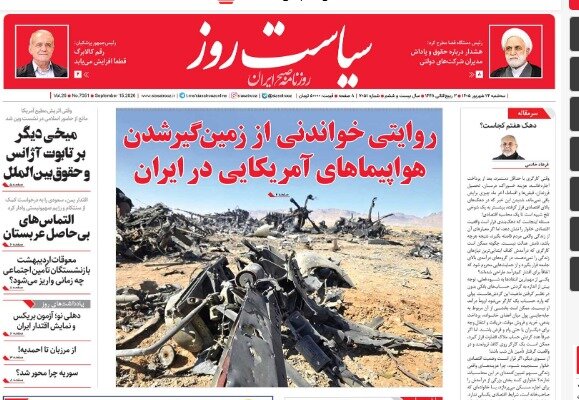
Siasat-e-Rooz examined the significance of the Delhi Declaration at the BRICS summit for Iran. The declaration matters for Iran in several ways. First, BRICS expressed concern over the rise of unilateral tariff and non‑tariff measures that violate World Trade Organization rules.
Second, the declaration deemed economic sanctions and unilateral coercive measures imposed without UN Security Council authorization as contrary to international law, and called for their removal. Although the declaration does not explicitly name the United States, this clause is legally and politically important for Iran, since much of the economic pressure on Iran comes through unilateral and secondary sanctions. Third, the declaration supported reforming global economic governance structures, including the IMF and World Bank. Fourth, BRICS supported Iran and Ethiopia’s accession to the World Trade Organization — a notable development for Tehran. Taken together, these points show that BRICS is attempting to change the rules of the game, not merely form another economic club.
Shargh: Following US sanctions: Iran’s third-largest trade partner complies
Shargh analyzed Turkey’s alignment with sanctions as Iran’s third-largest trading partner. The paper wrote: After the UAE — Iran’s second-largest trade partner — announced that it was halting all financial and commercial exchanges with Iran, Turkey has now officially prohibited its companies from trading with Iran and declared that it cannot pay for Iranian gas imports due to US sanctions, and will settle this debt only through food and medicine. For Iran, Turkey is not merely an export market; it is a potential route for connecting to regional production, distribution, and trade networks. Turkey’s proximity to Europe, its transportation infrastructure, membership in the EU customs union, and its extensive network of international companies have turned it into a major industrial and export hub. Turkey’s official stance comes at a time when it has sought to take advantage of the US –Israel conflict with Iran by activating alternative transit corridors to replace Iranian routes and the Strait of Hormuz.
Javan: Where do we stand?
In an article, Javan discussed Iran’s position in the international system. It wrote: Iran is present in the international system and is a member of many international institutions and organizations. What matters is the extent to which Iran uses the capacities of international law to defend its interests, consolidate its positions, and participate in shaping international norms and practices. Iran’s place in the global legal order depends on its ability to convert its political, scientific, and human capacities into legal influence. If Iran adopts an active approach in the international arena, utilizes international institutions, trains specialized human resources, and expands legal cooperation with other countries, it will be able to exert greater influence on global legal processes. Iran must move beyond mere presence in the global legal order and become an active player — one that both defends its sovereignty and national interests and contributes meaningfully to shaping the rules that determine the future of relations among nations.
Donya‑e‑Eqtesad: Foreign trade caught in war corridors
In recent years, Iran has sought to expand its foreign relations and reduce pressure from international sanctions by joining groups such as BRICS, the Shanghai Cooperation Organization, the Eurasian Economic Union, and the Economic Cooperation Organization (ECO). However, the continuation of wartime conditions and disruptions in major foreign trade routes have once again highlighted the vulnerability of Iran’s economic and commercial networks. Mohammadreza Modoudi, a trade expert, told Donya‑e‑Eqtesad that regional and international agreements play an important role in developing Iran’s foreign trade. He said: From a broad perspective, joining international agreements — especially trade agreements that can connect Iran beyond its borders — is a positive and necessary step. Nevertheless, evaluating the performance of these agreements should not ignore Iran’s internal trade problems. If these agreements have not yet demonstrated their full potential in Iran’s foreign trade, the reason is not solely the inefficiency of these institutions; a significant part of the problem stems from fundamental domestic obstacles.
Hamshahri: Military spoils — from tactical gain to strategic leap
Hamshahri interviewed military analyst Mehdi Tolouvand about US military equipment captured by Iranian forces. He argued that the importance of such equipment is not merely in possessing a weapon or system, but in the technology embedded within it, which can provide opportunities for understanding and advancing Iran’s defense industries. Thus, the value of these spoils is not limited to the equipment itself; the information and technology they contain are also significant. Sometimes the software, and sometimes the hardware, is the most valuable part of a system. Access to such equipment initially has tactical value, but can influence the country’s long‑term weapons strategy. By disassembling this equipment, Iran has studied components such as CPUs and microprocessors, and through reverse engineering has modified and localized certain technologies to meet its own needs.
Leave a Comment